
The Faculty Colloquium usually takes place every second Monday each month during the semester (four talks). National and international scientists as well as scientists from our Faculty of Chemistry give insight into their field of research in the framework of 45-minute lectures.
Before the colloquia, there is usually a faculty coffee, during which faculty members are cordially invited to meet for an exchange over coffee and cake.
Program Coordination: Univ.-Prof. Dr. Christian Friedrich Wilhelm Becker
ECTS
If at least three of the four lectures have been attended, this course will have a credit of 0.5 ECTS.

Monday, 06 May 2024, 16:00 / Joseph Loschmidt lecture hall (LH 2) of the Faculty of Chemistry:
Eugenio Coronado, University of Valencia, Spain
„Functional molecules in two-dimensional materials"
In the last 30 years coordination and supramolecular chemistry have been a source of molecular assemblies and multifunctional materials with novel properties or combination of properties. These molecular systems have also shown to be relevant in other emerging fields including molecular electronics, spintronics and quantum computing [1]. A current trend in this area is to combine these molecular systems with graphene and other 2D materials with the aim of exploring the novel properties and applications that may emerge from such combinations. Here I will illustrate this concept with some relevant examples: 1) 2D MOFs with magnetic functionalities [2, 3]; 2) hybrid smart heterostructures and robust electronic devices based on bistable spin crossover molecules interfaced with graphene and other 2D materials [4-7].
[1] E. Coronado. Nature Rev. Mater. 5, 87 (2020)
[2] J. Lopez-Cabrelles, S. Mañas-Valero et al. Nature Chem. 10, 1001 (2018)
[3] J. Lopez-Cabrelles, S. Mañas-Valero et al. J. Am. Chem. Soc. 143, 18502 (2021)
[4] R. Torres-Cavanillas et al., Nat. Chem. 13, 1101-1109 (2021)
[5] C. Boix-Constant et al, Adv. Mater. 34, 2110027 (2022)
[6] M. Gavara-Edo et al., Adv. Mater. 34, 2202551 (2022)
[7] R. Torres-Cavanillas, M. Gavara-Edo, E. Coronado, Adv. Mater. 36, 2307718 (2024)
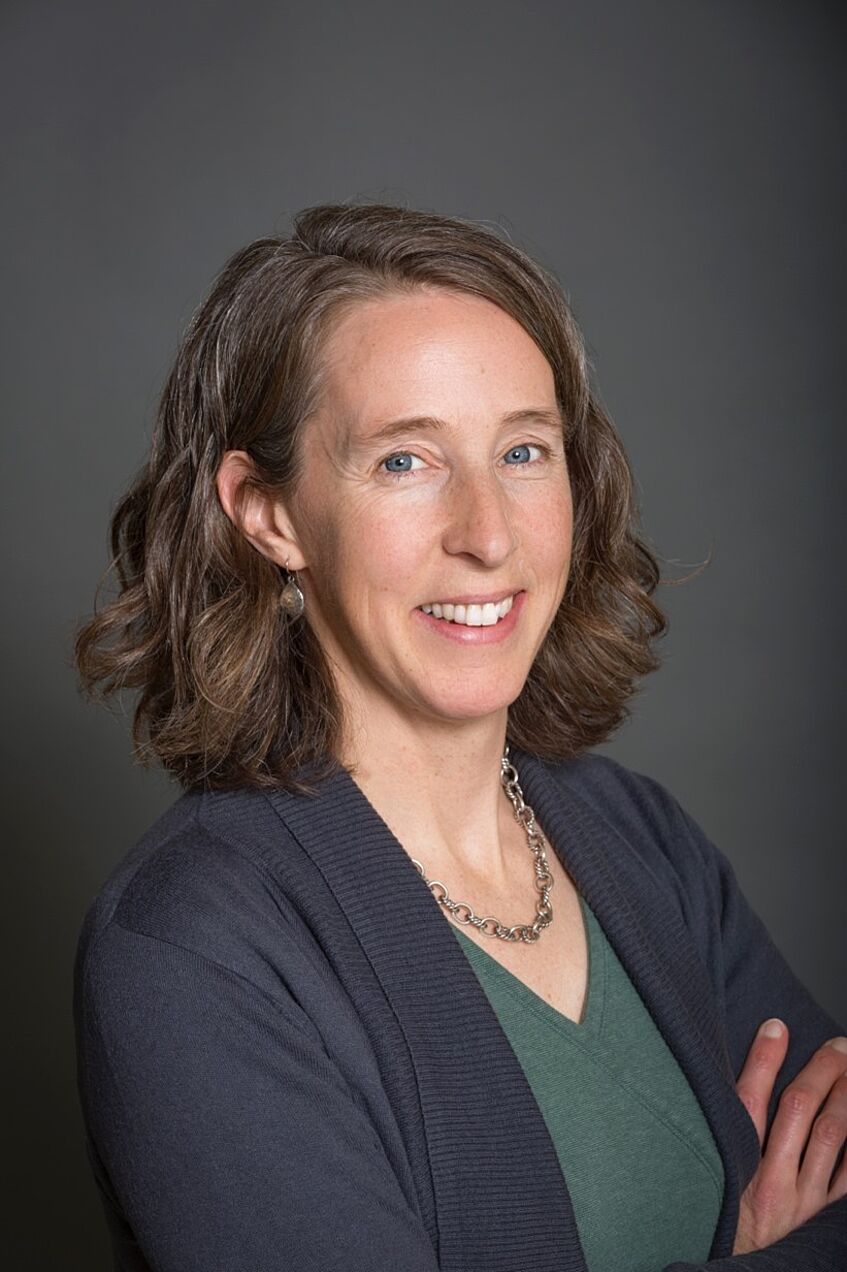
A. Heather Eliassen, © Eliassen
Tuesday, 21 May 2024, 16:00 / Joseph Loschmidt lecture hall (LH 2) of the Faculty of Chemistry:
A. Heather Eliassen, Harvard T.H. Chan School of Public Health, US
"Metabolomics and chronic disease: etiologic investigations through molecular epidemiology"
Molecular epidemiology is a powerful tool, integrating laboratory methods into epidemiology, to better understand the biological underpinnings of health and disease in populations. Recent advances in assay methods, data processing, and analytic tools have allowed for the application of omics profiling in large-scale population-based studies. The metabolome, long considered the end product of other ‘-omes’, reflects both endogenous and exogenous inputs. Incorporating metabolomic profiling into molecular epidemiology studies has enhanced our understanding of metabolic perturbation in disease development and allowed for explorations of biologic influences of modifiable environmental factors, such as aspects of diet and lifestyle. We have leveraged the Nurses’ Health Studies, ongoing prospective cohort studies with decades of follow-up, to investigate the role of the metabolome in the development of cancer and cardiometabolic diseases. This talk will cover critical aspects of study design in molecular epidemiology, considerations for analysis of metabolomic profiles, and associations of metabolomics with lifestyle factors and risk of chronic diseases.
A. Heather Eliassen, ScD is Professor of Nutrition and Epidemiology at the Harvard T.H. Chan School of Public Health and Professor of Medicine at Harvard Medical School. She is Associate Director of the Channing Division of Network Medicine and Director of the Chronic Disease Epidemiology Unit at Brigham and Women’s Hospital. Dr. Eliassen is co-PI of two ongoing prospective cohort studies of >238,000 women, the Nurses’ Health Study, founded in 1976, and the Nurses’ Health Study II, founded in 1989. She is Director of the Channing/Harvard Cohort Biorepository, which houses more than three million biospecimens from 200,000 cohort participants, and Co-Leader of the Cancer Epidemiology Program at the Dana-Farber/Harvard Cancer Center.
Monday, 10 June 2024, 16:00 / Joseph Loschmidt lecture hall (LH 2) of the Faculty of Chemistry:
Sebastian Falk, Max Perutz Laboratories, University of Vienna, Austria
“Mechanistic insights into RNA-mediated gene silencing”
Our group is interested in unraveling the molecular determinants that allow the establishment of a potent RNA interference (RNAi) response in which small RNAs are used to silence gene expression. We particularly want to understand how small RNAs are produced and how sRNAs induce heterochromatin formation in the nuclear RNA interference pathway.
piRNAs are a specific class of small RNAs that suppress transposable elements in the reproductive tissues of animals, safeguarding genome integrity and contributing to the maintenance of fertility. We have recently characterized the piRNA precursors-binding complex and also discovered a new endoribonuclease complex, PUCH, that specifically cleaves m7-capped piRNA precursors in the nematode C. elegans (1, 2). PUCH represents a unique enzyme assembled from Schlafen domains, which have been suggested to function as nucleases with roles in innate immunity in mammals.
Moreover, I want to discuss our recent efforts in characterizing a small, abundant human protein important for forming heterochromatin. This protein functions as a versatile protein-protein interaction hub by recognizing different short linear motifs and thus might act as a driver that supports liquid-liquid phase separation and, therefore, the formation of membrane-less organelles in the nucleus.
1. Perez-Borrajero, C., Podvalnaya, N., Holleis, K., Lichtenberger, R., Karaulanov, E., Simon, B., Basquin, J., Hennig, J., Ketting, R. F., and Falk, S. (2021) Structural basis of PETISCO complex assembly during piRNA biogenesis in C. elegans. Genes Dev. 35, 1304–1323
2. Podvalnaya, N., Bronkhorst, A. W., Lichtenberger, R., Hellmann, S., Nischwitz, E., Falk, T., Karaulanov, E., Butter, F., Falk, S., and Ketting, R. F. (2023) piRNA processing by a trimeric Schlafen-domain nuclease. Nature. 622, 402–409